Ontario Battery Storage: Contract or Class A Savings?
Battery storage projects in Ontario are paid in three ways, and the three share one battery. An IESO contract pays for being available. Class A global adjustment savings change a large user's bill. Merchant energy pays for electricity bought and sold. The fit depends on who holds the meter, how long the battery can run, and which cash a lender can treat as firm.
Figures below come from IESO pages read on 26 October 2026, each with its source link. This note is not a price forecast.
All dollar amounts are Canadian dollars, as published by the IESO.
How a capacity payment differs from an energy payment, in general, is the capacity market primer. How several services share one battery is BESS revenue stacking.
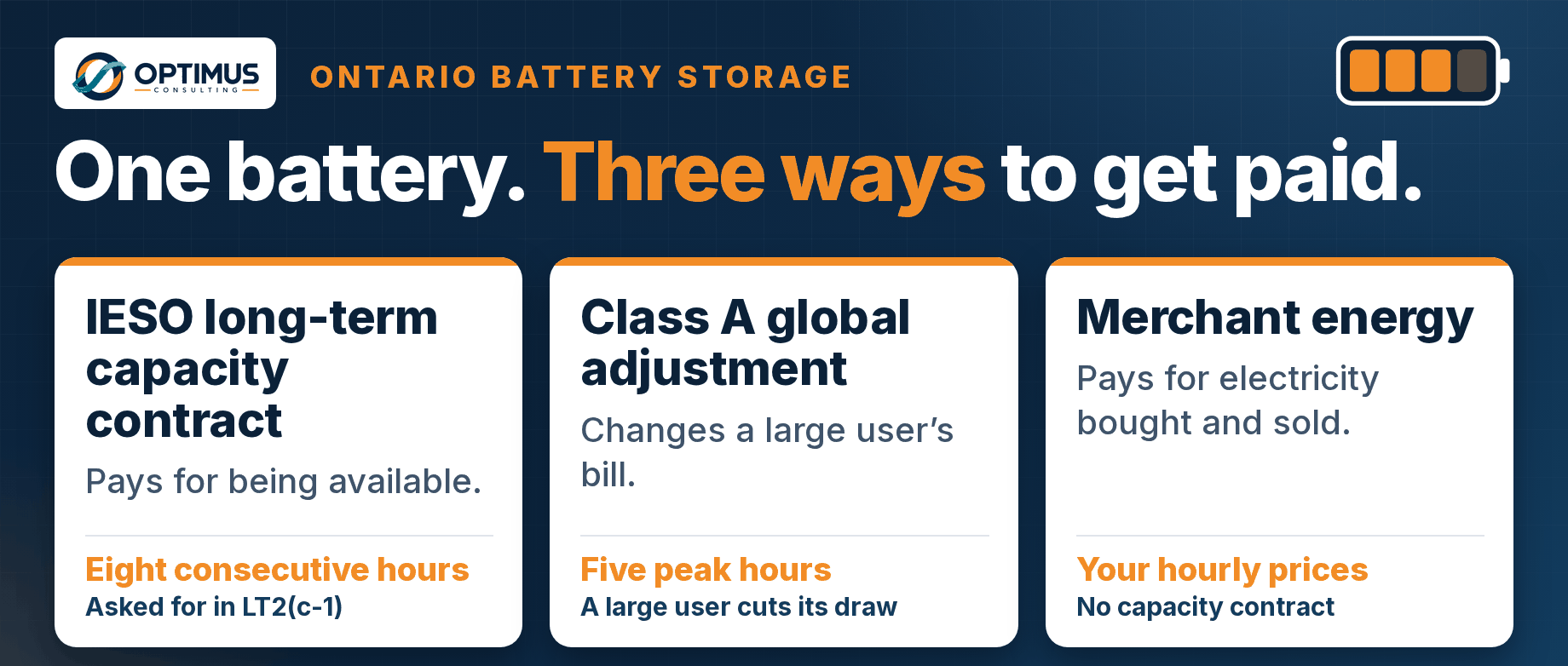
Figure 1. One battery, three ways to get paid.
Which path fits
It is not a dollar forecast.
| Path | Who it fits | What a lender sees | What to bring |
|---|---|---|---|
| IESO long-term capacity contract | A project that can win a multi-year IESO capacity contract. The first LT2 capacity window (LT2(c-1)) asked for eight consecutive hours. | A published fixed payment per megawatt per business day, plus the contract's performance terms. | The contract, or the form of contract, the megawatts, and the milestone date. |
| Class A global adjustment | A large user that qualifies under the Industrial Conservation Initiative and can cut its draw in Ontario's five peak hours. | A smaller share of global adjustment, only after the site qualifies. A new storage facility does not start there. | Twelve months of hourly demand, the industry code, Class A status, and withdrawals versus injections. |
| Merchant energy | A battery buying and selling energy in the IESO market, with no capacity contract and no host bill to cut. | Cash that moves with the hourly prices in the case. | The hourly prices you will use, the losses, and the connection limit. |
A megawatt-hour used to cut a factory's peak cannot also be sold as merchant energy. If two paths apply, the case has to assign the hours.
IESO battery storage contracts
The long contract pays for capacity. In LT2(c-1) the IESO executed contracts with three proponents for 640.00 MW of maximum contract capacity (LT2 page). The final results table of 13 July 2026 lists the same 640.00 MW, marks each project as storage, and shows a weighted average of $563.48 per MW-business day. That unit is dollars per megawatt per business day, not per megawatt-hour sold.
The 19 June 2026 news release calls them 20-year contracts, at a price 36 percent below the expedited long-term battery round and 16 percent below the first long-term battery round. It also says these projects take Ontario battery storage over 3,500 MW by 2030. That fleet sentence is the release, not a results-table row.
The final request for proposals (10 November 2025) targeted up to 600 MW and asked for new resources of at least 1 MW that can deliver for eight consecutive hours in the qualifying hours. The commitment period runs from commercial operation through 30 April 2050. The form of contract (4 November 2025) sets the commercial-operation milestone at 1 May 2030, unless a force majeure extension moves it. An earlier in-service date still ends on 30 April 2050, and a later one draws delay damages.
LT1 has two real totals, for two different questions. The results table (file dated 17 April 2026) shows ten storage projects, a storage total row of 1,883.15 MW nameplate capacity and 1,784.22 MW maximum contract capacity, and a weighted average of $672.32 per MW-business day. The LT1 page calls the storage result 1,784 MW and the whole round 13 proponents and 2,194.91 MW, in service between 2026 and 2028, including 410 MW of gas and biogas. The table's non-storage total includes 410.69 MW. Adding 1,784.22 and 410.69 equals 2,194.91. Use 1,784.22 MW for storage only.
The capacity auction page sets the 2026 auction for 25 and 26 November 2026, for summer 2027 and winter 2027/28, six months each. Storage can clear it and be paid the auction price for availability on business-day hours. It is not the long contract.
A lender on this path reads the price, the megawatts, the hours, and the milestone. Bring the contract, or the form of contract if the bid is still open.
Class A global adjustment, for a large user
Class A is a billing status under the Industrial Conservation Initiative, not a generation contract. Customers pay global adjustment, the charge for building and maintaining supply, on their share of Ontario's five highest demand hours. The eligibility page calls that share the peak demand factor, over a base period from 1 May to 30 April.
Average monthly maximum hourly demand in that base period sets three bands on the same page:
- Greater than 5 MW: automatic, with an opt-out by 15 June.
- Between 1 MW and 5 MW, including 5 MW: opt in by 15 June.
- Greater than 500 kW and less than 1 MW: only for industry codes starting 31, 32, 33, or 1114 (targeted manufacturing and industrial loads, including greenhouses), also opting in by 15 June.
The utility, or the IESO for a market participant, notifies eligible customers before 31 May. An existing Class A facility keeps its status unless it opts out. The ICI backgrounder (May 2025) puts the manufacturing band at greater than 500 kW up to 1 MW, and the middle band at greater than 1 MW up to 5 MW. A site on exactly 1 MW should check Ontario Regulation 429/04, which that backgrounder says governs if the wording differs.
The peak demand factor page bills each 1 May–30 April base period over the next 1 July–30 June. The base period ending 30 April 2026 is on bills from 1 July 2026 through 30 June 2027. Its five peak hours are 23 and 24 June, 24 and 28 July, and 11 August 2025. The Total column runs from 23,845.600 MWh to 24,897.773 MWh. Those five totals add to 122,317.277 MWh.
The page's worked example divides 20.015 MWh of customer use by that 122,317.277 MWh, for a factor of 0.00016363, then applies an example monthly global adjustment of $999.6 million to show $163,564.55. The customer volumes and the $999.6 million are the IESO's example. The hours and the system total are the published table. Miss the five hours and the factor does not move.
Two tests come before any Class A savings. Energy supplied in the base period must not exceed energy withdrawn. And a Class B storage facility may qualify only after a full base period of registered withdrawals, so a new battery does not start as Class A. The same eligibility page exempts Class B storage from Class B global adjustment on electricity stored and sent back, after a self-declaration.
The fit is a large user that clears a band and can cut those five hours. Bring demand through 30 April, the industry code, Class A status, withdrawals against injections, and a plan for hours that are not announced ahead.
Merchant energy, with your prices
Merchant energy has no capacity contract and no host bill to cut. The battery charges when storing is worth it and discharges when the sale covers cost, losses, and wear. Ontario energy storage on this path follows the hourly prices you bring.
Optimus advises on that model. The prices are yours. There is no Optimus Ontario price feed. How a lender reads the cash from one case is on the project finance for lenders page. Bring the price file, the losses, the connection limit, and any hour already promised elsewhere. Overlapping hours are chosen once. Adding the contract, the merchant spread, and the bill saving overstates the project.
Before the model is built
Name the path, and assign the hours if two paths share the battery. A later window can change the price and the term, so date the inputs. The draft window 2 contract of 9 October 2026 ends 30 April 2052.
For one Ontario project, start on the Canada advisory page and bring the hourly prices plus the contract or the bill.
Sources
- IESO, Class A eligibility. Bands, 15 June deadlines, base period, storage rule, and the Class B charge exemption.
- IESO, ICI backgrounder, May 2025. The 1 MW boundary and the export test.
- IESO, Peak demand factor. Calendar, five peak hours, worked example.
- IESO, LT2(c-1) results, 13 July 2026. 640.00 MW, $563.48 per MW-business day.
- IESO, 19 June 2026 release. 20-year term, 36 and 16 percent, over 3,500 MW by 2030.
- IESO, LT2 page. Three contracts, 640.00 MW.
- IESO, LT2(c-1) RFP, 10 November 2025. Up to 600 MW, eight hours, end date 30 April 2050.
- IESO, LT2(c-1) contract, 4 November 2025. Milestone 1 May 2030. "$" means Canadian dollars.
- IESO, LT1 results. Storage 1,883.15 MW nameplate capacity and 1,784.22 MW maximum contract capacity, $672.32, non-storage 410.69 MW.
- IESO, LT1 page. 13 proponents, 2,194.91 MW.
- IESO, Capacity Auction. 25–26 November 2026.
- IESO, draft LT2(c-2) contract, posted 9 October 2026 on the LT2 page. Expiry date 30 April 2052.
Questions
- How does an IESO capacity contract differ from Class A savings?
- An IESO capacity contract pays a storage project a fixed amount per megawatt for each business day, for being available. Class A changes the global adjustment on a large user's bill, based on that user's share of Ontario's five highest demand hours. One is contract revenue. The other is a smaller charge on a consumption bill. Keep them apart unless the same project is allowed to keep both.
- Can a new battery in Ontario join Class A immediately?
- The IESO eligibility page says a Class B electricity storage facility may become eligible for the Industrial Conservation Initiative only after it has registered withdrawals for a full base period, from 1 May through 30 April. It still has to meet the demand thresholds and the other rules in Ontario Regulation 429/04.
- Is the IESO capacity auction the same as a long-term storage contract?
- No. On 26 October 2026 the IESO capacity auction page listed the 2026 auction for 25 and 26 November 2026, covering summer 2027 and winter 2027/28, each a six-month period. The long-term contracts from the first LT2 capacity window are a separate procurement. The 19 June 2026 IESO news release calls those 20-year contracts.
- What should you bring before an Ontario battery case is built?
- Name the payment path. Bring the hourly prices or the contract price you want used, and the battery's power, stored energy, and losses. For Class A, also bring twelve months of hourly site demand, the industry code, and whether the site is already Class A. Optimus advises on the model using the prices and terms you supply.